- contact@digimenial.com
- Noida. UP

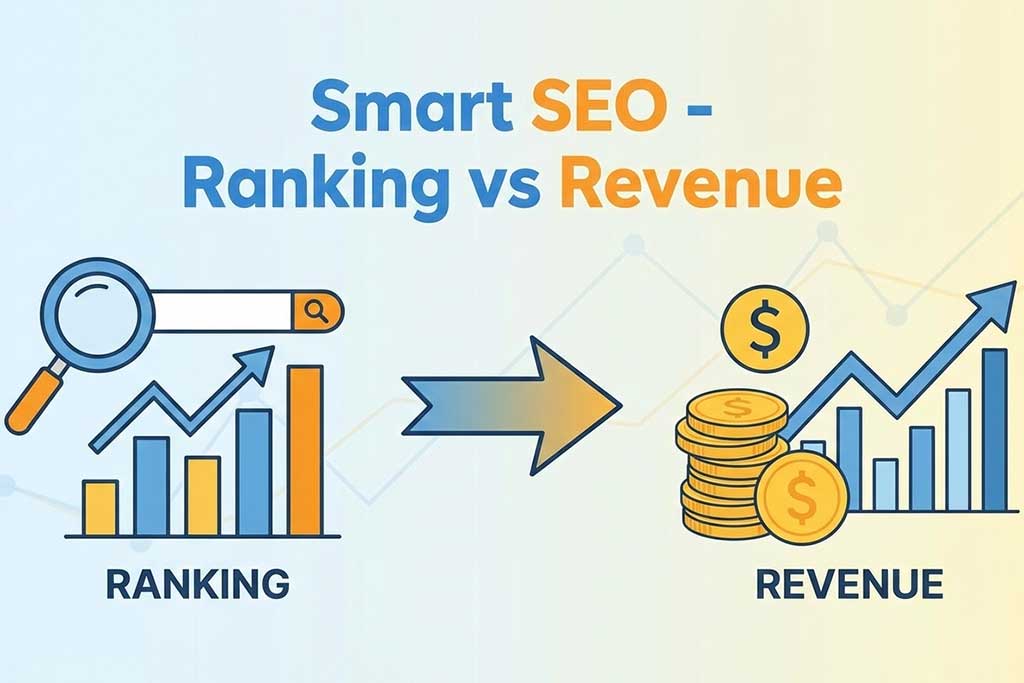
Rankings vs Revenue: How Smart Businesses Build SEO That Actually Grows Sales
20
Feb
The Rankings Obsession
Most small businesses are taught to chase rankings as the ultimate SEO goal. But here’s the uncomfortable truth: rankings alone don’t grow revenue. You can rank on page one and still struggle with sales. Visibility matters — but profitability matters more.
Why Most SEO Reports Are Misleading
SEO reports often highlight rankings, impressions, and traffic growth because they’re easy to measure and look impressive. But they rarely connect performance to real business outcomes. Without linking SEO to leads and revenue, reports become vanity summaries instead of strategic tools.
- – Rankings aligned with conversion-focused keywords
- – Traffic analysis based on buyer intent signals
- – Business KPIs integrated into SEO reporting
- – Revenue attribution added to performance dashboards
How Vanity Metrics Kill ROI
Vanity metrics create an illusion of progress. Traffic growth without enquiries or sales leads to wasted marketing spend. Businesses that focus only on impressions or clicks often overlook deeper problems in targeting, messaging, or conversion experience.
- – Intent filtering to eliminate low-value traffic
- – Behavioural analysis to identify engagement gaps
- – Revenue-based KPI tracking frameworks
- – Conversion-focused performance measurement
The Wrong Way to Do SEO
Many small businesses don’t fail because they ignore SEO — they fail because execution lacks direction. Random activities create motion but not growth. Without alignment between strategy and business goals, SEO efforts remain disconnected.
- – Unified SEO roadmap aligned with business objectives
- – Structured execution across channels
- – Strategic planning before implementation
- – Regular ecosystem-level SEO audits
Random Blog Posts
Publishing content without purpose weakens authority. Writing trending or unrelated topics may increase page count but rarely attracts customers. Content should guide potential buyers toward your services and expertise.
- – Service-aligned content planning
- – Topic cluster development around core offerings
- – Intent-driven editorial calendars
- – Structured internal pathways toward conversion pages
Disconnected Backlinks
Backlinks still influence rankings, but relevance now outweighs quantity. Generic directory links or unrelated mentions add little value. Authority grows when links come from contextually aligned sources.
- – Industry-relevant link acquisition strategy
- – Quality evaluation frameworks for backlinks
- – Partnership-driven authority building
- – Contextual brand mention campaigns
Technical SEO Without User Focus
Technical optimisation alone cannot drive growth. Users ultimately decide whether SEO succeeds. Confusing layouts, slow navigation, or unclear calls-to-action reduce conversions regardless of rankings.
- – UX-driven technical optimisation
- – Mobile-first usability improvements
- – Clear navigation and conversion pathways
- – Performance optimisation aligned with user behaviour
AI-Generated Content Without Expertise
AI accelerates content production, but unedited outputs reduce credibility. Businesses that combine AI efficiency with human expertise create content that feels trustworthy and valuable.
- – Expert review workflows for AI content
- – Original insights added to AI drafts
- – Brand voice consistency frameworks
- – Quality control standards for publishing
The Right Way: Topical Authority SEO
Topical authority focuses on depth rather than scattered keywords. Businesses win when they become the most reliable resource within their niche. This builds trust with users and AI-driven search systems alike.
- – Structured topic ecosystem planning
- – Cluster-based content architecture
- – Expertise-led publishing strategy
- – Gradual niche expansion roadmap
Owning a Topic Completely
Owning a topic means covering every stage of customer understanding — from awareness to decision-making. Comprehensive coverage signals expertise and builds buyer confidence.
- – Customer journey content mapping
- – Educational and service content integration
- – Supporting articles linked to core services
- – Consistent publishing around core themes
Depth Over Volume
Producing fewer but stronger pieces creates sustainable authority. Deep content improves engagement, builds credibility, and delivers long-term ranking stability.
- – Content expansion strategies
- – Regular content improvement cycles
- – Engagement-focused optimisation
- – Evergreen content strengthening plans
Clarity Over Cleverness
Clear communication converts better than complicated messaging. When users understand value quickly, they trust faster and act sooner.
- – Simplified messaging frameworks
- – Readability optimisation standards
- – Readability optimisation standards
- – Logical page structuring models
AI Trust and Brand Authority
Modern AI search evaluates consistency across signals. Structured information, expertise, and credibility patterns increase algorithmic confidence in your brand.
- – Entity consistency across platforms
- – Structured data implementation
- – Author credibility reinforcement
- – Focused topical positioning
SEO Is a System, Not a Task
SEO works best when every component connects. Content attracts visitors, technical performance supports experience, and authority signals build trust. Missing links weaken overall performance.
- – Integrated SEO operating framework
- – Cross-channel alignment strategies
- – Continuous optimisation cycles
- – Holistic performance monitoring
Content + Internal Linking
Internal links distribute authority and guide users logically through decision stages. Proper linking transforms content into a conversion journey.
- – Structured internal linking architecture
- – Contextual anchor strategies
- – Decision-path optimisation
- – Authority distribution planning
Technical SEO + UX
Technical improvements should reduce friction. Faster pages and stable layouts improve engagement and strengthen behavioural signals.
- – Core Web Vitals optimisation plans
- – Mobile usability enhancements
- – Conversion-focused speed optimisation
- – UX testing and refinement processes
Local SEO + Reviews
Local trust accelerates buying decisions. Reviews act as digital word-of-mouth and significantly influence local search visibility.
- – Review acquisition systems
- – Google Business Profile optimisation
- – Local consistency management
- – GEO visibility enhancement strategies
Authority + Trust Signals
Authority grows through consistent presence across channels. Verified information and credible mentions reinforce reliability.
- – Brand mention monitoring systems
- – EEAT signal enhancement
- – Consistent brand messaging frameworks
- – Reputation-building outreach strategies
Case Study: From Traffic Growth to Revenue Growth
A local home renovation company was receiving 15,000 monthly visitors but only 5–7 qualified leads. Most traffic came from DIY blog articles attracting non-buyers. Rankings improved, but revenue stagnated.
Strategy Changes
- – Removed low-intent informational focus
- – Built service-led topic clusters
- – Optimised local GEO landing pages
- – Added project case studies and visuals
- – Strengthened internal links toward service pages
Results After 6 Months
- – Traffic decreased by 18%
- – Qualified leads increased by 160%
- – Phone enquiries doubled
- – Organic revenue grew significantly
Key Insight: Less traffic with stronger intent delivers higher business growth.
Metrics That Actually Matter
SEO success should reflect business performance. Smart businesses evaluate outcomes that influence profitability rather than visibility alone.
- – Outcome-based performance tracking
- – CRM integration with SEO analytics
- – Conversion optimisation monitoring
- – Marketing-to-sales alignment systems
Cost Per Lead
Solution: Track acquisition efficiency and optimise channels that reduce long-term marketing costs.
Lead Quality
Solution: Measure sales conversion ratios to ensure SEO attracts decision-ready prospects.
Conversion Rate
Solution: Improve user journeys and calls-to-action to maximise results from existing traffic.
Revenue Attribution
Solution: Connect organic traffic directly to revenue data using analytics and CRM integration.
Rankings look impressive. Revenue builds businesses.
Are you building SEO for rankings or for revenue?
Book a Free SEO Performance Review and discover how to turn visibility into real sales growth.