- contact@digimenial.com
- Noida. UP

AIO + GEO SEO for Small Businesses
30
Jan
How to Turn Search Traffic into Paying Customers
If you’re a small business owner, you’ve probably heard this before:
- “SEO takes time.”
- “SEO is a long-term game.”
- “Just wait for rankings, traffic will come.”
And maybe traffic did come.
But customers? Not so much.
This is where most small businesses feel confused, frustrated, or even cheated by SEO. The problem isn’t SEO itself. The problem is outdated SEO thinking.
Search has changed forever—and in 2026, businesses that don’t adapt will quietly disappear from visibility.
Let’s talk about what actually works now.
Introduction: Why SEO Changed Forever
Search engines are no longer just matching keywords to pages.
Today, search is driven by:
- – AI-powered understanding
- – Local intent
- – User behaviour signals
Google and other search engines now behave more like humans. They understand meaning, context, and intent—not just words.
At the same time, search has become hyper-local. People don’t just search for services anymore. They search for:
- – Services near them
- – Businesses they can trust
- – Options they can act on immediately
This is why small businesses must adapt in 2026.
If your SEO strategy is still built only around:
- – Rankings
- – Traffic volume
- – Generic blog posts
…it’s already outdated.
The future belongs to businesses that combine AIO SEO (AI-Optimised SEO) with GEO SEO (Geographic / Local SEO)
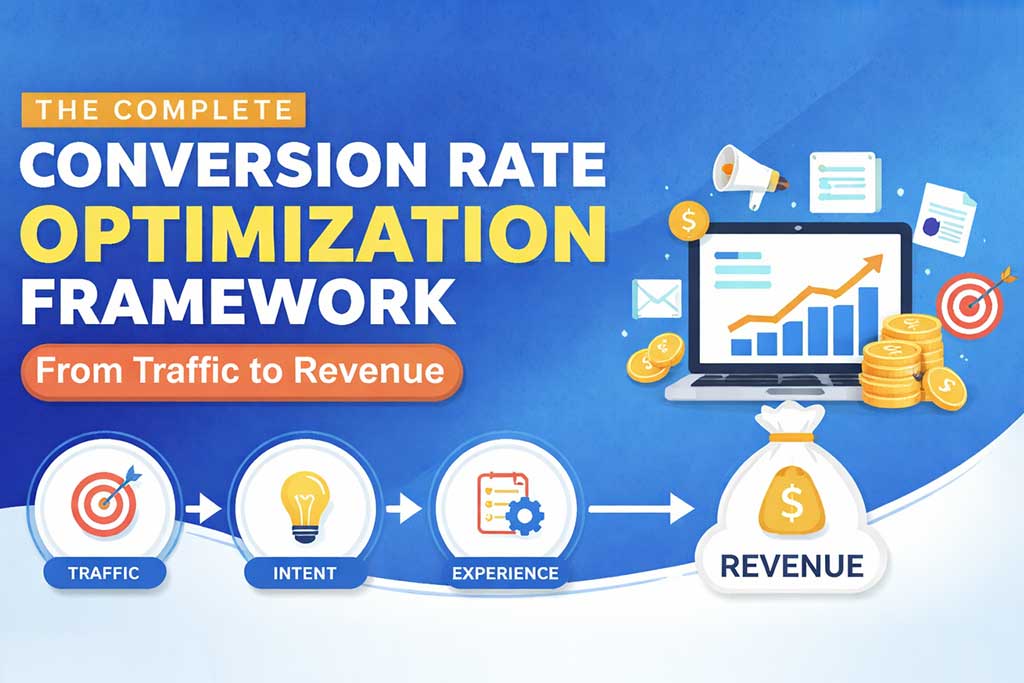
Why High Traffic Without Intent Is Useless
Let’s look at a very common situation.
A business owner says:
- “My website gets 10,000 visitors a month, but I’m not getting leads.”
This happens more often than you think.
Why? Because not all traffic is equal.
Someone reading “What is digital marketing?”
is very different from someone searching
“digital marketing agency near me”.
One is learning.
The other is ready to buy.
High traffic without intent is useless because:
- – It doesn’t convert
- – It inflates vanity metrics
- – It gives a false sense of success
What actually matters is intent-based traffic.
Intent-Based Keyword Mapping Means:
- – Mapping keywords to buyer readiness
- – Understanding where the user is in the funnel
- – Creating pages that match that exact intent
For example:
- – Informational intent → blogs and guides
- – Comparison intent → service pages and case studies
- – Transactional intent → local landing pages
SEO starts working only when intent meets action.
AIO SEO for Small Businesses (Simplified)
AIO SEO sounds technical, but the idea is simple.
It means creating SEO that AI can understand, trust, and recommend.
Search engines now use large language models (LLMs) to evaluate content. These systems don’t just scan keywords—they judge quality.
Here’s how AIO SEO works for small businesses.
Semantic Content (Meaning Over Keywords)
Semantic content focuses on:
- – Topics, not just keywords
- – Related questions and concepts
- – Clear explanations instead of repetition
This helps AI understand:
- – What your business does
- – Who it helps
- – Why it’s relevant
You don’t need fancy language.
You need clarity.
Topical Authority (Owning a Subject)
Small businesses often think they need hundreds of blogs. They don’t.
They need:
- – Fewer topics
- – Covered deeply
- – Properly interconnected
Topical authority means:
- – Creating pillar pages
- – Supporting them with related content
- – Internally linking everything logically
Depth beats volume. Always.
EEAT and Trust Signals
AI doesn’t trust anonymous content.
It looks for:
- – Real authors
- – Business legitimacy
- – Experience and proof
EEAT for small businesses includes:
- – Clear author bios
- – About page with real story
- – Client reviews and testimonials
- – Case studies and examples
- – Accurate business information
Trust is no longer optional. It’s a ranking factor.
AI-Readable Structure
AI loves structure.
That means:
- – Clear headings
- – Short paragraphs
- – Bullet points
- – FAQs
- – Schema markup
This doesn’t just help SEO—it improves user experience too.
How AIO SEO Helps Small Businesses Compete
Big brands have budgets.
Small businesses win with focus and clarity.
AIO SEO allows small brands to:
- – Compete in niche markets
- – Build authority faster
- – Be recommended by AI-driven search results
You don’t need to be bigger.
You need to be more relevant.
GEO SEO: The Hidden Revenue Engine
If AIO SEO builds understanding, GEO SEO drives action.
GEO SEO focuses on where the search happens.
For small businesses, this is often where real money comes from.
Local Pack Visibility
The local pack (map results) is prime real estate.
Ranking here means:
- – Higher trust
- – Higher click-through rates
- – Faster conversions
Most service businesses get more calls from:
- – Google Business Profile
- – Maps listings
than from organic blog traffic.
Reviews as Conversion Assets
Reviews are no longer just social proof.
They are ranking and conversion signals.
Search engines use reviews to judge:
- – Trust
- – Relevance
- – User satisfaction
Good reviews:
- – Improve visibility
- – Increase clicks
- – Boost conversions
Ignoring reviews is leaving money on the table.
Hyperlocal Content Clusters
Instead of one generic service page, GEO SEO uses:
- – Area-specific pages
- – Location-focused content
- – Local context and examples
This helps capture:
- – “Near me” searches
- – Neighbourhood-level intent
- – Immediate buyers
Why Local SEO Converts Faster Than Ads
Ads stop the moment you stop paying.
Local SEO:
- – Builds long-term visibility
- – Earns trust over time
- – Delivers compounding returns
For many small businesses, GEO SEO becomes the highest ROI channel.
Credit: LinkedIn Article 1, LinkedIn Article 2, LinkedIn Article 3, LinkedIn Article 4
When SEO Actually Works
SEO works only when it’s treated as a system, not a checklist.
Successful SEO connects:
- ✓ On-page optimisation
- ✓ User experience (UX)
- ✓ High-quality content
- ✓ Relevant links
- ✓ Local trust signals
When one piece is missing, results suffer.
Why Isolated SEO Tasks Fail
Common mistakes include:
- – Writing blogs without internal links
- – Building backlinks without relevance
- – Fixing technical SEO without improving UX
- – Creating content without conversion paths
SEO fails when it’s fragmented.
SEO wins when everything supports the same goal:
turning visitors into customers.
Real Outcomes SEO Should Deliver
Let’s make this very clear.
SEO success is not:
- – Higher rankings alone
- – More impressions
- – Better tool scores
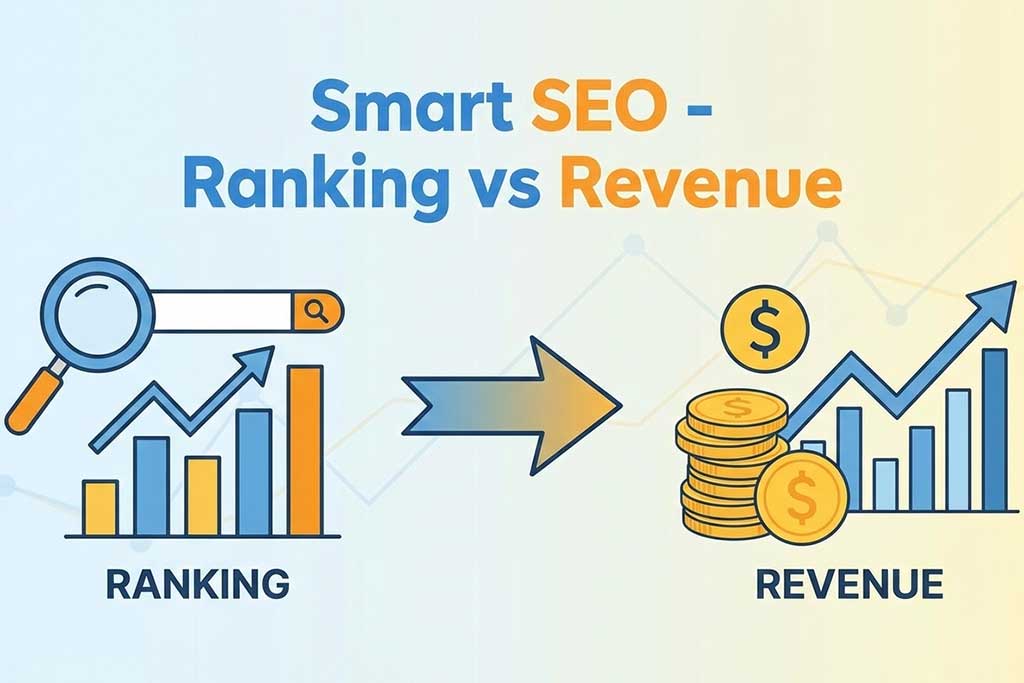
SEO success is business growth.
For small businesses, that means:
- – Phone calls from real prospects
- – Appointment bookings
- – Store visits (for local businesses)
- – Sales enquiries and leads
If SEO isn’t delivering these outcomes, it’s broken—no matter what the report says.
Final Thought:
Here’s the truth most agencies won’t tell you:
If SEO is not generating customers, it is broken.
SEO in 2026 is not about gaming algorithms.
It’s about aligning with how people search, decide, and buy.
AIO + GEO SEO is not a trend.
It’s the new foundation.
Want to Turn SEO Into a Growth Engine?
If you want to:
- – Stop chasing useless traffic
- – Focus on buyers, not browsers
- – Build SEO that drives real revenue
Then let’s talk.
📞 Book an SEO Growth Blueprint Call
We’ll review:
- – Your current SEO setup
- – Missed intent opportunities
- – Local visibility gaps
- – Revenue leaks
No jargon. No vanity metrics.
Just clear next steps to turn search traffic into paying customers.