- contact@digimenial.com
- Noida. UP

Why SEO Fails for Most Small Businesses?
(And How Revenue-First SEO Fixes It)
12
Jan
If you’re a small business owner, chances are you’ve already “done SEO.”
You may have:
- – Paid an agency or freelancer
- – Published blogs regularly
- – Built some backlinks
- – Watched your rankings move up and down
And yet…
Your phone isn’t ringing consistently.
Leads are unpredictable.
Revenue hasn’t changed much.
This is not because SEO “doesn’t work.”
It’s because most SEO is done the wrong way for small businesses.
Let’s break down why SEO fails so often—and what actually works instead.
The Biggest SEO Lie Small Businesses Believe
“If I rank on Google, my business will grow.”
This is the most common—and most expensive—SEO myth.
Ranking feels like success because it’s visible, easy to track, and looks impressive in reports. But rankings alone don’t pay salaries, rent, or marketing bills.
What really matters is what happens after someone clicks your website.
Many small businesses discover this the hard way:
- – They rank for keywords but get no enquiries
- – Traffic increases, but sales don’t
- – SEO reports look great, but business numbers stay flat
That’s because traffic without intent is just noise.
Real business growth happens when:
- – The right people visit your site
- – At the right stage of buying
- – And your site guides them to take action
SEO should not be built to win positions.
It should be built to win customers.
Why Traditional SEO Fails Small Businesses
Traditional SEO models were not designed for how search works today—especially for local and service-based businesses.
Let’s look at the biggest reasons it fails.
Chasing High-Volume Keywords with No Buying Intent
Many SEO strategies start with tools:
- – “This keyword has 10,000 searches”
- – “This one is easy to rank for”
But they ignore one critical question:
Is the searcher actually ready to buy?
For example:
- – “What is digital marketing?” → informational
- – “Best digital marketing agency near me” → high intent
Ranking for the first might bring traffic.
Ranking for the second brings revenue.
Most small businesses waste months chasing visibility instead of intent.
SEO Done to Impress Tools, Not Customers
Another major problem is optimisation for scores instead of people.
You’ve probably seen this:
- – Keyword stuffing to increase density
- – Content written only to satisfy SEO checklists
- – Pages that read well to bots but poorly to humans
Search engines today are powered by AI.
They don’t reward mechanical optimization anymore.
They reward:
- – Clarity
- – Usefulness
- – Context
- – Real problem-solving
If your content doesn’t help a real user, no tool score will save it.
Disconnected SEO Execution (Where Everything Breaks)
SEO fails when it’s done in silos.
Common disconnects include:
- – Content without internal linking
Blog posts exist, but nothing connects them into a journey. - – Backlinks without relevance
Links are built, but from unrelated or low-trust sources - – Technical SEO without UX
The site loads fast, but users can’t find what they need.
SEO works only when everything connects:
- – Content
- – Structure
- – Authority
- – Experience
Without connection, rankings don’t convert.
Credit: LinkedIn Article
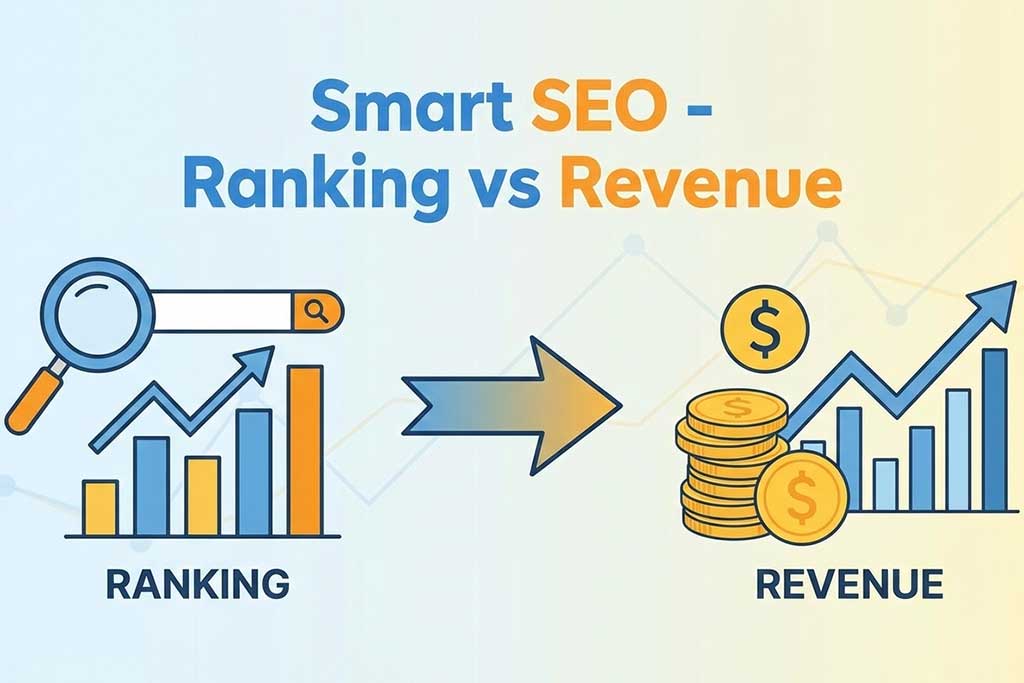
Revenue-First SEO Explained (AIO + GEO Model)
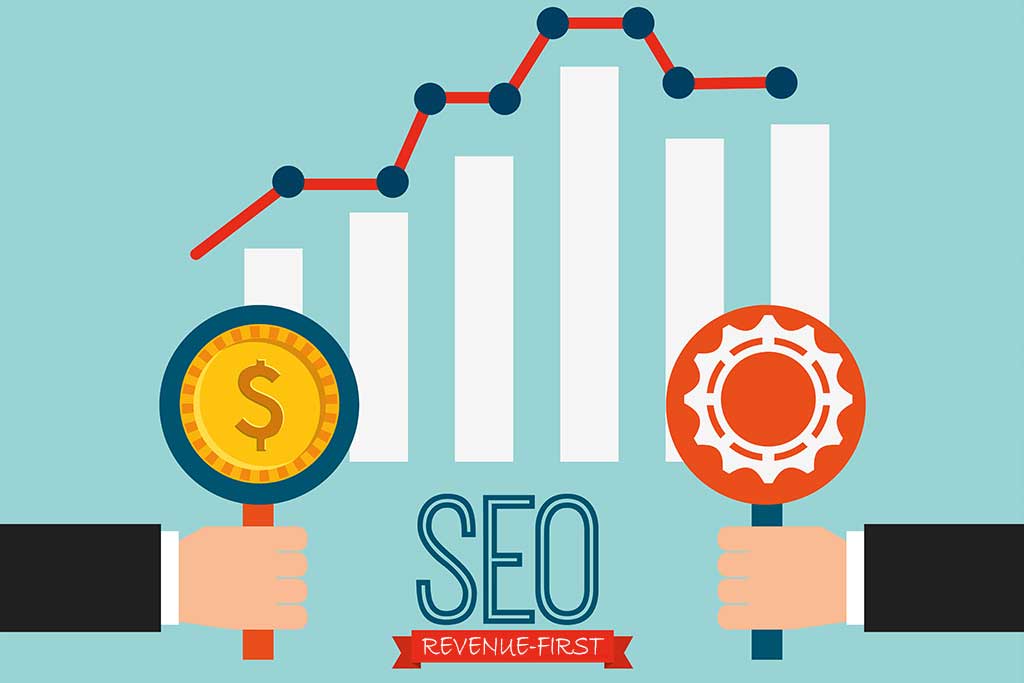
Revenue-first SEO flips the entire approach.
Instead of asking:
- “How do we rank higher?”
It asks:
- “How do we generate more business from search?”
This is where AIO SEO (AI-Optimised SEO) and GEO SEO (Geographic SEO) come together.
Credit: LinkedIn Article
Mapping Keywords to Business Reality
Every keyword should be mapped to:
- – Buyer intent – Are they researching or ready to act?
- – Funnel stage – Awareness, consideration, or decision?
- – Revenue impact – Will this lead to enquiries or sales?
For example:
- – Awareness content builds trust
- – Local service pages drive calls
- – Comparison pages close deals
Not all pages are equal—but together they create growth.
Why AI Search Rewards This Approach
Search engines now use AI to understand:
- – Meaning, not just words
- – Relationships between topics
- – Business relevance to queries
This means:
- – Clear, helpful content wins
- – Strong topical coverage beats random blogs
- – Trust signals matter more than tricks
When your SEO strategy mirrors how real users think and buy, AI naturally aligns with it.
Treating Google Like a User, Not an Algorithm
This is one of the most important mindset shifts.
Google is no longer a simple rule-based system.
It behaves more like a curious user trying to understand your business.
AI search understands:
- – Context – What is this page really about?
- – Entities – Is this business real, credible, and consistent?
- – Intent – Does this page satisfy the searcher’s need?
That’s why:
- – Over-optimised pages fail
- – Thin AI content fails
- – Clever tricks stop working
What works instead is problem-solving content.
Content that:
- – Answers real questions
- – Explains clearly
- – Shows expertise
- – Guides the user forward
When you focus on helping first, optimisation follows naturally.
What Small Businesses Should Track Instead of Rankings
Rankings are not useless—but they are secondary metrics.
Primary SEO success metrics should be tied directly to business outcomes.
Metrics That Actually Matter
Instead of obsessing over position #1, track:
- Leads generated from organic search
- Phone calls from website & Google Business Profile
- Walk-ins for local businesses
- Form submissions & bookings
- Pipeline value from SEO leads
These numbers tell you:
- – Whether SEO is working
- – Which pages convert
- – Where to double down
If SEO doesn’t move these metrics, it’s not delivering real value.
Why Vanity Metrics Can Be Dangerous
Vanity metrics create false confidence:
- – Traffic increases → business stays flat
- – Rankings improve → ROI remains unclear
- – Reports look good → growth stalls
Revenue-first SEO removes this confusion by tying every effort to outcomes.
Credit: LinkedIn Article
SEO Is Slow When Done Wrong, Powerful When Done Right
SEO has a reputation for being slow.
In reality:
- – Bad SEO is slow
- – Disconnected SEO is slow
- – Vanity-driven SEO is slow
But revenue-focused SEO builds momentum.
When done right:
- – Trust compounds
- – Authority grows
- – Local visibility strengthens
- – Conversion rates improve
And over time, SEO becomes one of the highest ROI channels for small businesses.
Final Thought: Are You Building SEO for Rankings or for Revenue?
This is the most important question every business owner should ask.
SEO is not about impressing tools.
It’s not about charts and positions alone.
It’s about changing business numbers.
- Leads.
- Calls.
- Revenue.
If your SEO isn’t moving these, it needs a reset.
Want to know if your SEO is built for revenue or vanity?
I offer a Free SEO Revenue Audit that looks at:
- – Intent gaps
- – Conversion leaks
- – Local visibility
- – Content & authority issues
No fluff. No tool screenshots.
Just clear insights tied to business growth.
If you’re ready to make SEO work the way it should—for revenue—this is where to start.